
Article by Jay Patel, CEO of IXCEL.Tech
Last week I spoke at the prestigious RAF Club to a room of exclusive business leaders about why they should take control of their AI models (the engine) and their data (the fuel) instead of being back-seat drivers in someone else’s taxi. I used my car analogy to make the quick points but wasn’t able to advise on how to actually do this in the brief time I had.
The event ended with 3 questions posed to the audience to take away and the subject requires some thought and input so here is my personal take on the questions:
Where Can You Not Switch?
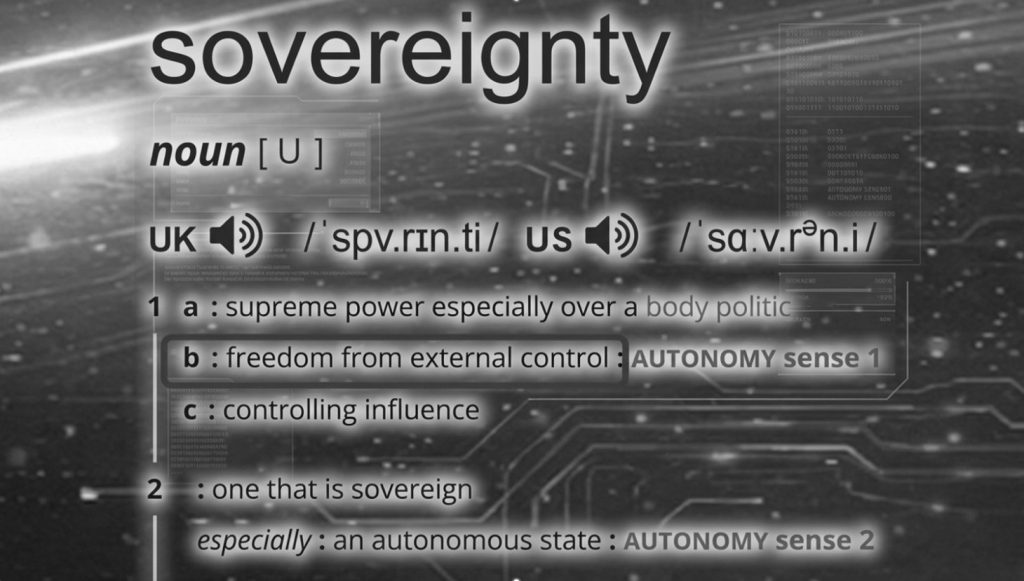
I’m going to start off controversially…The narrative in the room around Digital Sovereignty was dangerously misleading. A lot of the discussions skirted around the issue that almost everyone was using a Frontier model from one the big 3 providers in both their personal and professional lives. Only 1 person in the room was actually developing thier own model and the majority had no idea that they should and could use a free open-source model for a vast majority of thier use-cases. Thge ghosts of all the AI vendors not in the rooms smiled reassuringly. It was also suggested that achieving sovereignty is as easy of moving from these global hyperscalers to another infrastructure provider. This the equivalent of parking your rental car in a different “sovereign” garage, the problem is solved. Right? Wrong! If you don’t control the engine (the model) and you don’t own the fuel source (the data), you are not sovereign.
What I learnt (and already knew) is people choose short-term convenience over long-term control. The risk of vendor lock-in and structural dependency is not really top-of-mind and the inherent risk of putting your data (the fuel) into someone else’s engine is not worth the friction involved to use your own models. In fact I got the distinct impression that people don’t even understand how easy it is to use your own AI models. I’m not even talking about building your own Attention algorithms or training your own Recurrent Neural Networks on expensive GPUs and TPUs, but simply referring to using publicly available open-source models that are optimised to run on a mobile phone or a laptop. Most businesses, if not all of them, have the hardware necessary today to switch. So why don’t they? The black box of proprietary Frontier Models such as GPT, Claude or Gemini offer unmatched speed anhd convenience, but create a chain of critical commercial, technical, regulatory and capability-based dependencies that makes your business fundamentally non-sovereign.
When (not if) a vendor suddenly shifts commercial terms or alters model behaviour (and there are daily and weekly reminders of this), it’s a stark reminder that your business is at the mercy of someone else. How do you know if you have crossed from user to hostage? Here’s 3 areas of Lock-In that I see consistently:
1. Technical Lock-In
- API Couplings: Core business workflows are tied directly to a single vendor’s API.
- Brittle Engineering: Prompts are engineered specifically for one model’s behaviour and fail when migrated.
- Data Silos: Enterprise data is trapped in proprietary embeddings or vector formats.
- Orchestration Traps: Agentic workflows are tightly coupled to a single provider’s ecosystem.
2. Economic Lock-In
- Price Vulnerability: Sudden API price increases must be absorbed because there is no alternative.
- Prohibitive Friction: The financial and operational cost of switching systems exceeds the company’s tolerance.
- Capability Atrophy: Internal teams lack the technical skills to execute a migration, forcing dependence on the vendor’s roadmap.
3. Strategic Lock-In
- Permanent Assumptions: Core business processes assume permanent, uninterrupted vendor availability.
- Surrendered Advantage: Your competitive edge is entirely dependent on an external company accelerating its technology faster than your competitors.
To break free from this ‘lock-in, you must shift focus from sovereignty (where the data and models physically live) to self-reliance (you own and control the data and models). But that’s not an easily monetisable buzzword. Achieving true control requires paying the ‘inconvenience xax’ of doing the hard work of building an architecture where the core logic and proprietary data remain within your controlled environment and reducing the external LLM dependency to a temporary, interchangeable commodity or replace it entirely. Yes, the room rightly argued about the risks of concentrating hardware and software but the reality is over the last few decades in Tech and thanks to Cloud Sovereignty we have learnt a hell of a lot about distributed and federated architectures and how to mitigate the risks. The lessons learnt the hard way and best practices refined through the good way requires a layered approach that combines Orchestration, Logic and Data.
The good news is that the tools to achieve self-reliance are already available and maturing rapidly week-by-week. You don’t need to build a trillion-parameter model from scratch to be sovereign. Instead, you can switch to a modular architecture through four key architectural countermeasures:
- Retrieval-Augmented Generation (RAG): By separating enterprise knowledge from the model, you can swap out the underlying LLM while retaining 100% of your intelligence. I actually advocote very strongly and have done from the GPT 1.0 days that the LLM should only be the UX layer, but if the whole world wants to build deterministic agents on a non-deterministic techn ology, who am I to argue. I’ll just continue to collect the ‘told-you-so’ cards as I have been!
- Knowledge Graphs: The importance of preserving semantic relationships independently of the model can’t be understated. The fact that most people don’t know this begs the question – what happened to all the common sense? Surely ensuring your data’s context isn’t tied to a specific vendor’s embedding logic is a no brainer? Running an open-source embedding on a old laptop may take a lot longer than it takes to make a coffee but in the long run you can enjoy that coffee safe in the knowledge (pun intended!) that your data and the context is in your control.
- Meta-Prompt Engineering: I don’t know where to start with Prompt Engineering. The analogy that comes to mind is if you were to put the generic low-grade petrol you get at the pump into a F1 supercar. Will it work? Yes. But with a bit of refining to the fuel the engine will perform so much better, let alone the cost efficiency. Prompt Engineering is like using high-octane fuel in your business. Moving this behavioural control into your internal orchestration layers prevents your workflows from breaking when a vendor updates their model and has significant cost efficiency and model effectiveness benefits.
- Agentic Architecture: Let’s be clear – the very nature of agents is to be deterministic and LLM’s are non-deterministic. If you don’t grasp this fundamental paradox and design autonomous workflows without taking this into consideration, then good luck trying to get these agents to work at scale let alone be ‘sovereign’ in their decisions and outcomes.
We can’t discuss these though without addressing the hardware issue. An organisation does not become sovereign simply by owning the raw compute or spending billions on localised hardware. The reality is that most organisations can’t afford to do this and so the risk of just using someone else’s hardware is justified. This is an architectural concern though and can be solved by designing your orchestration layer as portable, your logic flows as internally governed and your data platforms as independent. Put the effort into this and the hardware limitations become options and choices rather than constraints. Talk about turning weakness into strength!
If your current AI strategy is simply plugging into the latest, flashiest AI model API (looking at you Claude today and Gemini tomorrow!), you are sitting at the back being driven in a taxi, you are not in the driving seat of your own car.
Where Can You Not See?
In the mad rush to adopt AI, enterprises have eagerly embraced a dangerous trade-off as addressed in the previous question, sacrificing convenience for control. The current landscape operates under a glaring vulnerability where visibility is blinded by all the AI slop. The headline is ‘Sovereignty starts with visibility’. So why rely on external AI models that you have little or no visibility of? Depending on massive, un-auditable ‘black boxes’ at the very heart of you business is surely not logical. True digital sovereignty demands absolute transparency into how decisions, reasoning and processing occur. This was true in the past and will be true in the future so why are so many not seeing this in the present? (Again, pun fully intended!)
If you can’t inspect the logic chain, you simply don’t control the system. When deploying AI, it introduces an array of hidden dangers that make compliance monitoring, risk management and transparency nearly impossible. These black boxes introduce severe visibility deficits:
- Invisible Reasoning Pathways: The exact cognitive steps a model takes to reach a conclusion are entirely hidden behind the arcane practice of model weighting.
- Hidden Training Data Influence: Systems are shaped by vast, unknown datasets, hidden biases, copyright liabilities where outdated or unclean information can silently infect model outputs.
- Non-Auditable Outputs: When a LLM generates legal advice, financial recommendations or strategic insights, it does so without a reliable, explainable evidence chain. And no reasoning doesn’t count!
- Unknown Behavioural Drift: Providers constantly tune their models behind the scenes. This creates silent shifts in moderation, safety thresholds, reasoning styles and performance, all without your consent or control.
This opacity means that the relationship between your inputs and the model’s outputs remains fundamentally non-deterministic. You are left with a system where outputs cannot be fully explained and reasoning cannot be truly verified.
What does it actually look like when you cannot see the Sovereignty of your AI system? The lack of visibility manifests in three critical operational failures:
1. Unmanaged Model Drift
A provider silently updates an API. Suddenly, your customer-facing AI changes its tone, its safety thresholds tighten and it begins refusing valid requests, or its performance degrades spikes. There are many examples of this and there will be many more across all the Frontier models.
2. Hallucinations Without Evidence Chains
You ask an AI tool to analyse something and it provides a highly coherent, highly convincing response. However, because the system is opaque, there is no way to verify if the conclusion is based on valid data or a statistical hallucination as ALL LLMs (yes ALL of them) are probabilistic and non-deterministic.
3. Hidden Data Relationships
Without structured internal systems, you can’t reliably show or understand why a conclusion was made, how different entities relate to each other within the model’s memory, or which specific piece of evidence heavily influenced a critical outcome.
I see these 3 consistently and despite numerious examples of this happening almost on a daily basis my words fall on deaf ears. I’ll try again – To trust AI you MUST implement architectural mechanisms that FORCE transparency onto these opaque systems. Must and Force being the operative words, these are non-negotiable if you want to be sovereign and enterprises who should know better, seem to have a collective amnesia on what happens if you don’t. Cue the latest example, it doesn’t matter when you are reading this – there will be a recent example of this being ignored. By decoupling the reasoning, data and execution flows from the external provider, you can transform blind faith into an auditable process.
Personally, I’m an advocate of implementing Retrieval-Augmented Generation (RAG) with tuned temperature parameters to ensure that responses are strictly and accurately grounded to guarantee an explicit, traceable path back to verified data sources. Another key tool I also evangelise is to implement your own Knowledge Graphs. These map out explicit entity relationships and semantic structures to create causal links that can be traced. This transforms isolated data sources into explainable, operational intelligence, allowing humans to see exactly how your model (the engine) is using the fuel (the data). To me this is a no-brainer but I get it, it’s hard when you just want to get things out the door. But what happens when on day 2, or day 3, week 4? Ask all the vibe coders and pay attention to the all the systems falling over when you can’t log into your banking app or your media platform goes down.
I should also mention the dangers of navigating invisible alignment systems where internal explicit instruction layers and monolithic system prompts force predictable behaviour from the model. I’ve debugged enough of these to give me a few extra grey hairs and we’re just getting started as agents take over the world! Relying on a properly designed agentic architecture that breaks tasks down into clear execution paths and workflow stages is the bare minimum to make decision routing visible. Digital sovereignty cannot exist in the dark. Organisations track where their data sits but ignore how it is processed, or at best this is an after-thought.
True sovereignty is absolute visibility into data flow, reasoning flow and execution flow. By implementing a strict, layered architectural approach where core business logic and decision-making processes live outside the black box of the LLM provider, you can stop guessing and starts auditing. To expand on my car analogy, you can actually see the dashboard.
Where Can You Not Say No?
The final question is the ultimate test of sovereignty. Ask yourself “Where do external providers have control over my capability?”
If you can’t predict the cost, the availability, or the terms of your core intelligence engine, you do not own it. The core difficulty though is that the global, centralised nature of AI and cloud computing inherently clashes with the complexity and risk of decoupling from this service model. It’s so easy and fast, the barriers of entry are so low that the trade-off and risks are easy to justify. The reality is that you need to think in hybrid terms. The models and the data they consume combine to form a single, interconnected challenge that needs a nuanced, granular approach. All data is not equal and all AI model use-cases are also not equal. When you build on external frontier APIs, you are giving away your data and paying for the privilege. The analogy I used at the talk I gave was that it’s like paying for petrol (or gas) but the car manufacturer can use that fuel however they want, including selling it to your competitor.
When an organisation lacks technological autonomy, enforcement is dictated to them from the outside across four distinct dimensions:
1. Commercial Enforcement
Because the enterprise has zero negotiation leverage, external providers can unilaterally raise prices, reduce rate limits, alter licensing structures or restrict access to premium tiers. If your entire business model relies on a specific API cost structure, a sudden price hike is an existential threat you cannot reject. This is not a new business practice, just ask those that have been using Oracle for the past few decades.
2. Regulatory and Geopolitical Enforcement
Global providers are bound by their own foreign jurisdictions, national security directives, export controls and geopolitical obligations. When those foreign governments impose restrictions, your enterprise indirectly inherits those constraints, forcing a bitter trade-off between local compliance and technological functionality.
3. Technical Enforcement
At any moment, a vendor can and do deprecate APIs, throttle performance, disable features or suspend accounts. If your critical workflows rely entirely on external compute and external inference, your operational continuity can be severed overnight without warning.
4. Behavioural Enforcement
External AI providers implicitly define what constitutes acceptable output, where moderation boundaries lie and what alignment priorities are encoded into the model. Consequently, you don’t fully control what its systems can say, what they can process or what they can refuse. You inherit the vendor’s ethical frameworks and legal interpretations rather than your own.
The dominant industry narrative I mentioned at the start emphasises acceleration, rapid ROI, immediate access and speed to market. All good things, but you need to at least ask if it’s worth the compromise? The danger of answering ‘yes’ is that it ignores a massive, systemic dependency risk that spans geopolitical, economic, operational and strategic boundaries. It forces you into a compulsory compromise that has far reaching precedents that echo into the future business models across the AI industry. Imagine if the Internet didn’t start off as a free and open information source!
Achieving the ability to operate autonomously and resiliently does’t mean you must undergo the impossible task of building an entire frontier LLM yourself. That’s like using a sledgehammer when you actually need a scalpel. The reality is that scalpels are relatively easy to make and use.
You can do this without slowing innovation by establishing absolute custody over the systems around your AI:
- Control the System Logic: Keep your core business rules and workflows proprietary and decoupled from any single API.
- Control the Retrieval Layer: Manage your own data, the models and the knowledge bases.
- Control the Execution Pathways: Build modular architectures with portable orchestration, allowing you to route workloads to different models as needed.
So ask yourself – Are you AI Sovereign?